
State Center Criminal History Checks
Match the State Center record question to its custodian. A city officer’s incident report begins with State Center Police or the city contact shown on the official site. If a deputy handled the call, the sheriff owns that report instead. County officials hold booking information, the clerk maintains filed cases, and Iowa DCI handles statewide fingerprint-supported history. This division is especially important in a small city where agency boundaries and mutual aid can affect which office created the file.
- Start with the State Center police or city contact for a report created by the city agency.
- Give the exact event date, time, location, involved name, and report number when known.
- Ask the Marshall County Sheriff when a deputy responded or when the question concerns booking or present jail custody.
- Search Iowa Courts Online under Marshall County for a filed citation, criminal charge, docket event, or disposition.
- Use Iowa DCI’s official process for releasable statewide Iowa criminal-history information.
A search should move only as far as the question requires. A police report answers what the responding officer documented. A court file answers what was charged and resolved. Neither should be read as a complete statewide record.
State Center Records at Small Scale
State Center had 1,391 residents in the official 2020 count. It is Marshall County’s second-largest incorporated city, yet it is only about five percent of Marshalltown’s size. That difference shapes public access. The research found an official city site and a police department, but not a detailed records-unit page, separate public request portal, city jail roster, or independent municipal case search.
The lack of those interfaces is not a dead end. It means phone, counter, and precise written-request routes matter more. Begin with local government, identify the responding agency, then move to the sheriff or clerk only when their records answer the question. Do not fill the gap with a commercial people-search page or assume the largest nearby police department keeps State Center files.
The official State Center site is the documented local starting point.
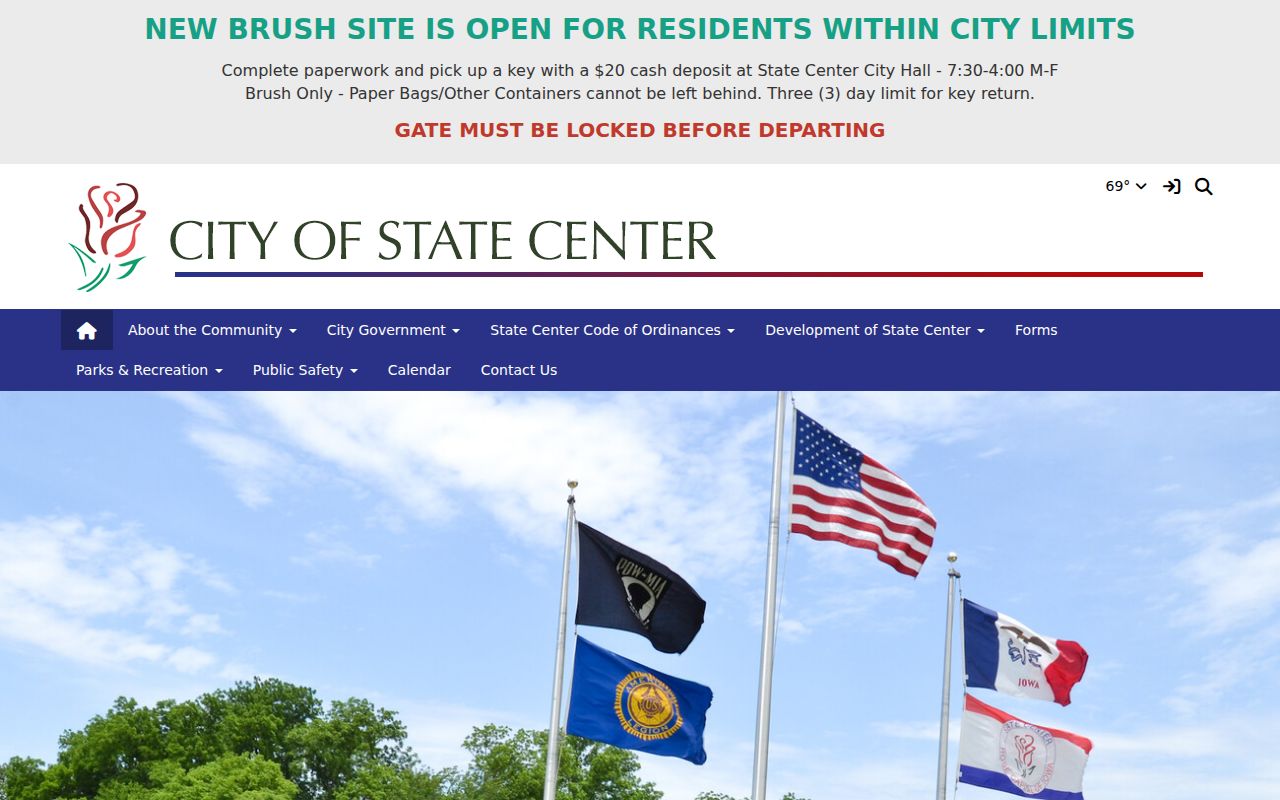
The city site should be checked for the current State Center police and municipal contact path.
Records at State Center Police
State Center Police Department exists, but the official search results did not expose a standalone records desk page, a complete request form, or a direct public report database. Use the police or city contact on the official site for a State Center report. Ask who responded before sending a request because a sheriff response changes the custodian.
A prepared request can state the requester’s contact information, event date and time, exact place, involved name, report number if known, the desired record, and delivery preference. These are useful details, not a claim that every field is legally required. Fees and turnaround terms were not located in the official sources. Request an estimate and confirm current methods rather than promising a cost or deadline.
No verified State Center police app with an app-only report, warrant, or roster tool was found. The official city channel remains the sound first step for a city-created record.
Who Holds State Center Records
The event location alone does not prove which agency holds the report. State Center Police may create a city incident file. A Marshall County deputy may instead create a sheriff report during coverage or mutual aid. If an arrest follows, the county jail creates its own booking entry. A later prosecution generates a court file at the Clerk of District Court.
| Record Question | First State Center Route | Fallback |
|---|---|---|
| What did a city officer report? | State Center police or city contact | Narrow chapter 22 request |
| What did a deputy report? | Marshall County Sheriff | Fax, mail, or in-person request |
| Is the person in jail? | Marshall County Jail | Written booking-record request |
| How did the charge end? | Iowa Courts Online | Clerk terminal or copy request |
This comparison keeps a city report from being confused with a booking or judgment. Each file may use similar names and charge terms, but each answers a different question.
Booking and Arrest Records in State Center
No verified State Center city jail roster exists. An arrestee is traced through the Marshall County Jail at 2369 Jessup Avenue in Marshalltown. Call 641-754-6380 for current custody or booking questions. The research found no official county daily booking gallery, so a recent State Center arrest may require a phone call or a narrow sheriff records request.
The arresting agency still controls its own incident report. This means a caller may need State Center Police for the officer narrative and the county jail for booking status. A booking can show intake, listed charges, bond, and custody facts, but it does not prove guilt. The filed case and disposition belong to Iowa District Court.
The Marshall County cities directory confirms State Center’s place in the county.
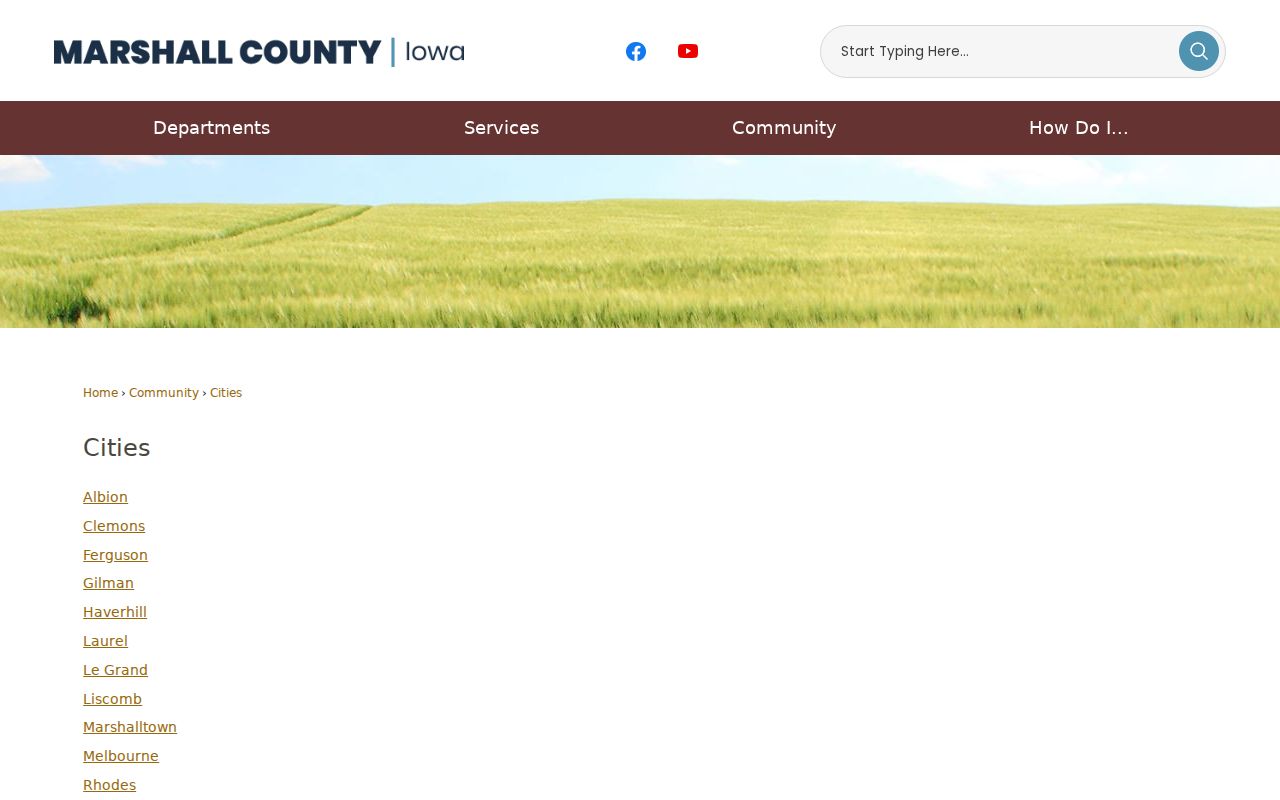
The county directory is a jurisdiction check, not a substitute for the sheriff’s booking contact.
Search State Center Court Records
Iowa Courts Online is State Center’s official case-search route. There is no separate municipal criminal portal in the researched sources. Open Trial Court Case Search and enter at least two surname letters. Exact spelling matters. First name is optional, the percent sign can act as a wildcard, and AND or OR controls can combine two names.
| Field | State Center Search Use |
|---|---|
| Last/Firm Name | Required for name search; use at least two letters |
| First Name | Optional; useful for common surnames |
| County | Select Marshall because city name may not be the court filter |
| Case ID | Use a known Iowa case number |
| Case Type | Narrow to the relevant criminal category |
Open the linked Case ID and review each count, event, judgment, and disposition. Some document links are available only at a clerk terminal or to a subscriber. A result page is a court file, not a full State Center rap sheet.
The State Center Municipal Court File
Filed State Center citations and criminal cases belong to Iowa’s unified District Court system. The Marshall County Clerk of District Court is at 17 E. Main Street in Marshalltown and can help with files or public documents not available through anonymous online access. Do not search for a standalone State Center criminal-court database that the official sources do not document.
| Court Name | Iowa District Court, Second Judicial District, District 2B |
|---|---|
| City Matters | Filed State Center citations and criminal cases in the unified trial-court system |
| Case Lookup Channel | Iowa Courts Online filtered to Marshall County |
| What the Docket Shows | Case number, charges, status, events, disposition, judgment, financial entries, and hearings as public access permits |
| Copies & Fees | Confirm current copy and certification terms with the clerk |
Older, archived, restricted, or terminal-only material may require the clerk. Unserved warrants and legally confidential case types can remain outside ordinary public access.
Filter State Center Record Matches
A statewide common-name search can return people and cases with no State Center link. Use Marshall County, case type, role, date, or case number controls when they are available. Read the county and case title before opening a result. A city name may appear in the narrative or agency history without serving as a portal filter.
A “no result” also has limits. The name may be spelled differently, the case may not yet be filed, a public link may be restricted, or the event may exist only as an agency report. DCI adds another distinction: if fingerprints were not taken and submitted, the state repository may have no arrest event. Follow up with the office tied to the specific State Center event instead of treating absence as proof that nothing occurred.
Note: Search results should be matched by identifiers and case details, not by name alone.
How State Center Records Reach the County
A State Center officer or responding deputy creates the incident report. The Marshall County jail creates a booking record after custody intake. The clerk opens an Iowa District Court case when a complaint, trial information, indictment, or another charging paper is filed. Court events and the final disposition can then be reported to Iowa DCI’s statewide repository.
Record flow: State Center Police Department or Marshall County Sheriff › Marshall County Courts › Iowa Department of Public Safety, Iowa Division of Criminal Investigation.
That flow explains why a recent city event may appear first with police or the jail, while a later record check shows a court outcome. The broader Marshall County criminal history overview addresses county and state channels in more depth. At State Center altitude, the key step is identifying the first responding agency.
State Center Records at Iowa DCI
Iowa DCI’s fingerprint-supported history is separate from State Center’s report and the Marshall County court docket. A public record check requires first name, last name, and exact date of birth. The fee is $15 for each last name searched. DCI accepts online, mail, fax, email, and in-person requests, but not phone requests.
Without a signed release, DCI cannot release completed deferred judgments or arrests more than 18 months old that lack a final disposition. Juvenile confidentiality is not erased by a private release. If a result differs from the court disposition, the person reviewing their own history can use DCI’s dispute contact; fingerprints may be requested to verify identity.
The Iowa DCI overview identifies the state agency.
The state page clarifies why a DCI history is not the same as a local State Center police report.
State Center Citations Become County Records
A citation written in State Center can begin locally and become a county court record after filing. The local agency holds its copy and report. The court assigns a case number and creates the docket. Future hearing notices, orders, and the disposition belong to that court case. A requester should preserve the citation number, date, and named agency because those details help connect the two stages.
The Iowa DPS rules and reports page adds state policy context.
State policy material should not be mistaken for the local citation or its later Marshall County docket.
If no court result appears, confirm spelling, county, and filing time, then contact the clerk. Do not infer a dismissal, conviction, or missing warrant from silence alone.
State Center Record Access Rules
Iowa’s open-records law applies to public records held by State Center, but the city is not the custodian of every criminal-history item. A request under chapter 22 should describe the city record sought and ask for electronic delivery when useful. The city may apply lawful costs and withhold confidential content. Court files, jail bookings, and DCI histories follow their own official channels.
Key Statutes:
Iowa Open Records Law, chapter 22 gives inspection and copy rights while listing confidential categories.
Iowa Code chapter 692 controls collection and dissemination of criminal-history data.
Iowa Code section 232.147 restricts juvenile court records.
Protected victim information, presentence reports, expunged or sealed matters, confidential juvenile records, and unserved warrants may not be available. An arrest record remains an allegation, not proof of guilt.